
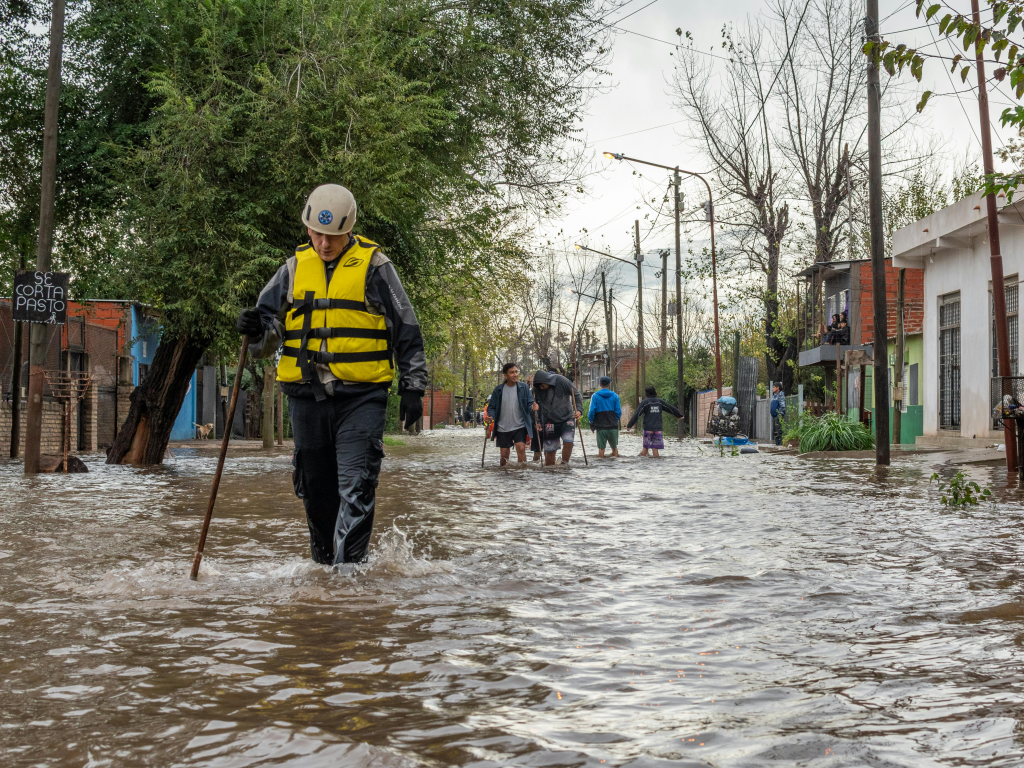
A significant breakthrough in climate resilience is expanding life-saving infrastructure to the world’s most vulnerable urban centers. According to a technical update from Google Research, the rollout of new flash flood predictions on the Flood Hub platform now provides up to 24 hours of advance notice for rapid-onset events. This Google-led initiative specifically targets urban areas with population densities exceeding 100 people per square kilometer, addressing a critical "warning gap" where developing nations in the Global South previously lacked the physical sensors and hydrological maps necessary for traditional forecasting.
The technical core of this expansion is a novel methodology called Groundsource, which utilizes AI to transform unstructured news reports into a high-precision historical dataset. By training recurrent neural networks on this data, Google researchers have developed a model capable of predicting flood risks based on global weather forecasts and geographic attributes like urbanization density and soil absorption. This "data-from-news" approach bypasses the need for expensive physical stream gauges, allowing the system to achieve forecasting precision in South America and Southeast Asia that is comparable to results seen from the National Weather Service in the United States.
This transition to scalable, AI-driven alerts is a vital defense against disasters that claim over 5,000 lives annually. As noted by the World Meteorological Organization, even a 12-hour lead time can result in a 60% reduction in flood-related damages. While the project currently focuses on urban population centers across 150 countries, the ongoing research phase aims to refine spatial resolution and extend these protective measures to rural populations. By democratizing access to early warning systems, the initiative provides international organizations and local governments with the data required to protect communities in an increasingly volatile climate.